







Blog

Alfalfa Baling Machine Guide for Smarter Farm Purchases
What an Alfalfa Baling Machine Is Supposed to Do on a Working Farm

An Alfalfa baling machine has one job that sounds simple until you have to do it in the field: gather cut forage, compress it into manageable bales, and do it fast enough that crop quality does not slide while the weather shifts. For growers handling alfalfa, the machine is not just a piece of equipment; it is the point where a season’s labor becomes something you can stack, store, sell, or move without turning the crop into loose, hard-to-handle material.
That matters because alfalfa is a sensitive crop. It dries, shatters, and loses value when baling is delayed or handled poorly. The right baling setup affects leaf retention, bale density, transport efficiency, and storage losses. The wrong setup, or even the right machine used at the wrong time, can leave a buyer with dusty bales, uneven moisture, or a storage problem that keeps costing money after harvest.
Why Buyers Still Spend Time Comparing Baling Equipment
When farm managers or sourcing teams start looking at baling equipment, they are usually trying to solve one of three problems: speed, consistency, or logistics. In a hay operation, those are not abstract goals. Speed means getting the crop up before dew or rain changes the game. Consistency means each bale handles the same way in the stack, trailer, or barn. Logistics means fewer trips, fewer broken bales, and a cleaner path from field to customer.
The term alfalfa baler can cover a range of equipment styles, from small square balers to large round balers and systems that handle forage in different moisture windows. A buyer should not start with brand names. Start with the crop, the field conditions, and the end use. Is the alfalfa going into feedlots, horse markets, export channels, or on-farm storage? That answer changes the baling machine selection more than a brochure ever will.
What the Machine Must Handle in Practice
Alfalfa is leafy, delicate, and often more demanding than grass hay. If the machine is too aggressive, it can strip leaves and lower feed value. If it is too light on compression, the bales will take up too much room and become expensive to store and ship. That balance is why many buyers compare the hay baling machine not only on capacity, but on how it treats the crop during pickup, compression, and tie-off.
A practical way to think about the machine is in stages:
Pickup and feeding
The machine has to lift windrowed forage cleanly and feed it evenly. Irregular feeding often shows up later as uneven bale shape or a machine that plugs at exactly the wrong time.
Compression
This is where density is created. More density usually improves shipping and storage efficiency, but only if the forage still holds its quality. That is the tradeoff buyers care about.
Binding or tying
If the bale is not held together properly, the handling advantage disappears. Poor tie performance is one of those problems that looks small until a truckload starts shedding material.
Key Machine Types and Where They Fit
Not every baler suits every operation. That sounds obvious, but it is often where buyers lose time.
Small square balers
These are common where a customer wants easy manual handling, stacked storage, or a traditional market for compact bales. They are often favored for alfalfa sold in smaller units because the bale shape is predictable and labor handling is straightforward.
Round balers
These tend to suit operations that prioritize fewer passes and quicker field throughput. They are useful where labor is tight, but the bales require equipment for handling and storage. For some farms, that is fine; for others, it adds cost later.
Large square systems
These are usually chosen when transport efficiency and commercial handling matter. They can reduce the number of units moved per ton, which is attractive in larger operations and shipping-oriented businesses. The downside is that the equipment and support needs are more demanding.
For a sourcing manager, the point is not which machine is “better.” It is which one fits the crop volume, labor model, and market expectations.
What to Look for Before Choosing a Baling Setup
The best purchase decisions usually come from a short list of operational checks rather than a long list of features.
1. Crop condition at baling time
Alfalfa moisture matters. Too wet and you risk spoilage or storage problems; too dry and leaf loss increases. A machine cannot fix bad timing, but the wrong machine can make timing mistakes more expensive.
2. Throughput requirements
If the operation runs under a tight weather window, field output matters more than almost anything else. A baler that is well matched to tractor power, windrow size, and field pace is often worth more than a machine with impressive specs that rarely match reality.
3. Bale size and handling method
Consider the full path: field pickup, stacking, loading, transport, and storage. A bale that is easy to make but awkward to move can become a labor problem later.
4. Maintenance access
This is the quiet issue many buyers overlook. Twine systems, belts, pickup tines, bearings, and hydraulic components all wear. If daily service points are difficult to reach, downtime becomes part of the cost of ownership.
5. Parts and support
A baler used in the middle of harvest does not care how good the sales pitch was. Local service access and common wear-part availability are often more valuable than flashy options.
Common Buying Mistakes That Create Expensive Surprises
One common mistake is matching the machine to acreage instead of matching it to the harvest bottleneck. Another is assuming all alfalfa balers perform equally in different moisture conditions. They do not. Crop state, windrow quality, and field terrain all affect performance.
Another practical warning: buyers sometimes focus only on bale density and forget about leaf retention. Dense bales are helpful, but not if the process knocks the nutritional value down. That is especially important in premium forage markets where buyers inspect the product more closely.
There is also the “overspec” trap. A machine with heavy-duty capability looks reassuring, but if the farm never uses that capacity, the extra purchase cost and maintenance burden may not pay back. In other words, bigger is not automatically safer or smarter.
How the Product Category Differs From an Industrial Baler
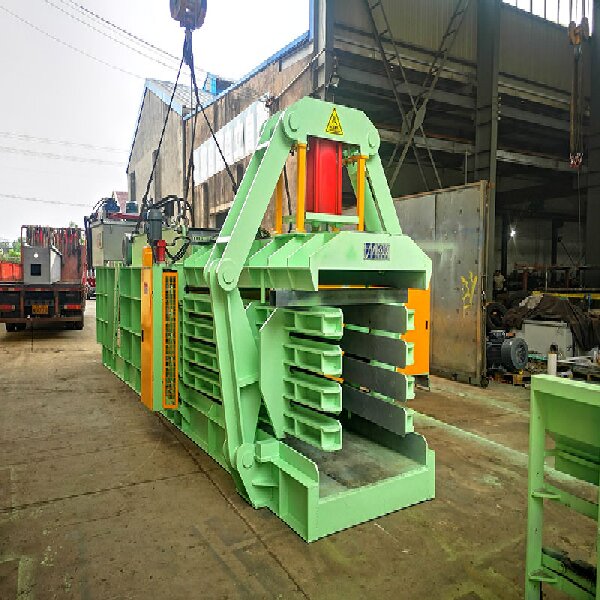
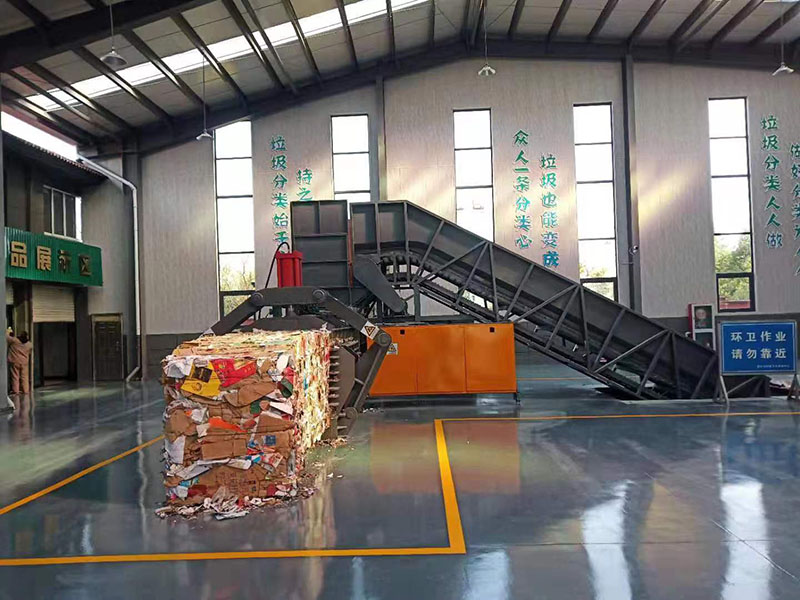
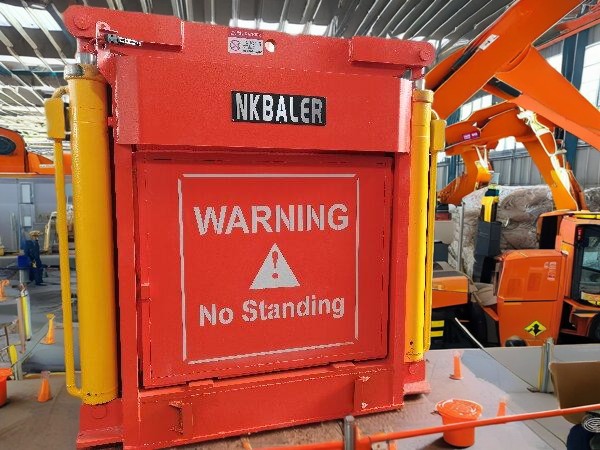
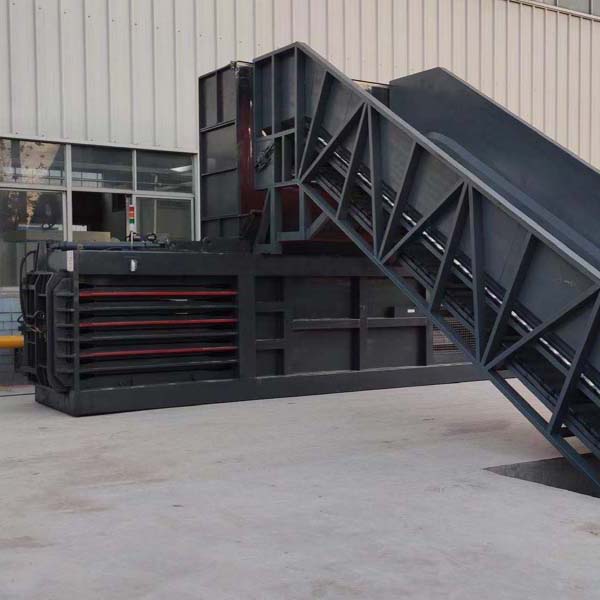
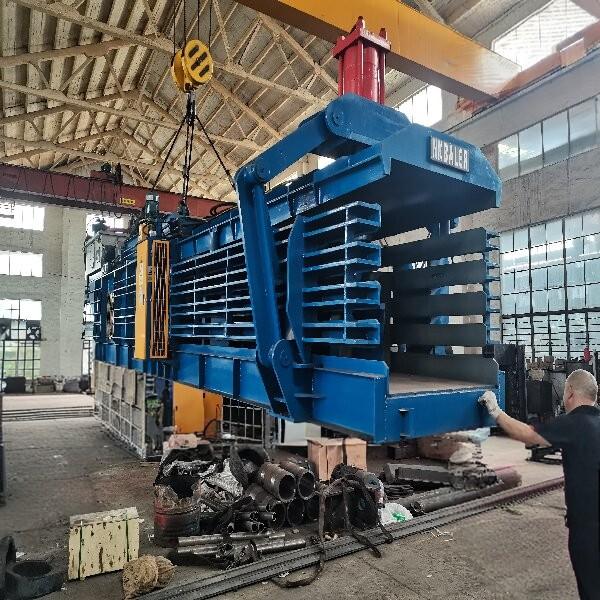
The product description provided for this article points to an industrial hydraulic baler or compaction machine: a large welded steel frame, hydraulic cylinders, control cabinet, and a chamber designed for dense material reduction. That layout is typical in recycling yards, scrap handling, and waste compaction, not in forage harvesting.
That distinction matters. An industrial baler is built to compress cardboard, plastic film, textiles, or other loose materials into dense blocks for storage and transport. An alfalfa baler, by contrast, is designed around crop pickup, crop flow, and feed-quality preservation. The two categories may share the word “baler,” and they both rely on compaction, but they solve very different problems.
For buyers, that means one simple rule: do not judge farm baling equipment by the same criteria used for waste compaction machinery. The frame strength may look similar, but the working process, material behavior, and end-use targets are not the same.
Questions Worth Asking a Supplier
Before committing to a machine, ask the supplier how the baler handles varying moisture, what wear parts need the most attention, and what kind of field conditions the unit is intended for. If the operation already has tractor limitations or transport constraints, bring those into the discussion early. A baler that looks efficient on paper can become impractical once you account for turning radius, loader compatibility, or barn access.
Also ask about the service rhythm. If routine checks are awkward, crews tend to postpone them. That is how small problems become harvest delays.
Practical Takeaway for Engineers and Farm Buyers
The best alfalfa hay baler is not the one with the loudest headline number. It is the one that preserves crop quality, fits the labor model, and keeps the harvest moving when weather windows tighten. If your operation is comparing machines now, define the bale format, storage plan, and handling method first. Then test the machine choice against those requirements, not against a brochure image.
If you are sourcing for a farm, dealership, or equipment fleet, build a short comparison sheet around crop conditions, service access, bale handling, and field output. Those four items will usually tell you more than a long feature list.
FAQ
Is a baler for alfalfa the same as a hay baler?
Not exactly. Alfalfa is hay, but it is often more sensitive to handling than mixed grass hay, so the machine and settings may need closer attention.
What matters most in alfalfa baling?
Moisture management, leaf retention, bale consistency, and the ability to keep harvesting before weather turns.
Should buyers always choose the largest machine available?
No. The right machine is the one that fits acreage, labor, storage, and market demand. Oversizing can create cost without solving the real bottleneck.
Where does an industrial baler fit into this conversation?
It usually doesn’t, except as a useful contrast. Industrial balers compress recyclable or waste materials, while agricultural balers are built to handle forage and protect feed value.
Next Step
If you are evaluating an Alfalfa baling machine for a farm purchase, start with the crop and handling plan, not the machine brochure. Define the bale type, the storage route, and the field pace you need to maintain. Once those are clear, the shortlist becomes much smaller and the decision is a lot less risky.
Recent Posts
Get In Touch With Us Now For A Product Quote


Hello! What do you need help with?