







Blog

Alfalfa Baling Machine Guide: How to Choose the Right Baler
Why an alfalfa baling machine is usually about more than just “making bales”
An Alfalfa baling machine is not chosen simply because a farm needs tighter bundles. For growers, custom operators, and forage handlers, the real decision is about preserving leaf quality, keeping field losses down, and getting a bale that can be handled, stacked, and sold without turning into waste in transit. The machinery picture behind baling is more complicated than it looks from the yard. The crop, moisture window, density target, and downstream storage all matter, and a machine that is too aggressive can do just as much damage as one that is too gentle.
That is why buyers often compare an alfalfa baler against a broader hay baling machine category, then narrow back down to what alfalfa actually demands. Alfalfa is leafier and more fragile than many grasses. Leaves carry a large share of the feed value, so the machine has to protect them while still producing a dense, transportable package. If you are sourcing equipment for a farm, a forage operation, or an OEM line that supports baled forage handling, the question is less “what can it press?” and more “what can it preserve?”

What the machine has to do in the field
The basic job is straightforward: gather cut and conditioned crop, compress it into a manageable form, and leave a package that can be moved without falling apart. In practice, that means the baler must work in a narrow window. Alfalfa that is too dry shatters. Alfalfa that is too wet invites spoilage, heating, and storage problems. The machine does not solve those agronomic issues, but it can make them worse if the pickup, compression chamber, or tying system is not matched to the crop.
Most buyers start by deciding whether they need small square bales, large square bales, or round bales. Each format changes labor needs, stacking method, and shipping density. Small bales are still valued where manual handling matters. Large bales suit commercial forage and export logistics. Round bales are common in many hay programs, though not every buyer wants the same storage behavior. The right alfalfa hay baler depends on what happens after the bale leaves the field.
Quick comparison: what matters when selecting baling equipment
There is no universal best machine, but there are useful trade-offs.
Small square balers are attractive where labor is available and feed-out is frequent. They are easier to split into smaller quantities, which can suit retail feed markets and mixed livestock operations. The downside is the labor burden and lower field throughput.
Large square balers are favored where density, transport efficiency, and stacking speed are priorities. They can reduce handling cost per ton, but they also tend to ask more from tractors, maintenance crews, and operators.
Round balers are often the simplest route for many farms. They are flexible, widely understood, and practical for storage in the field. But if the end customer wants neat stacking and high freight density, the round package may not be the best fit.
As a buyer, the question is not which style is “better” in the abstract. It is which style aligns with your labor, storage, and sale channel. A machine that looks efficient on paper can become expensive if it creates a handling bottleneck later.
Core features that matter for alfalfa specifically
Pickup action and crop flow
Alfalfa is easier to damage than coarse stems, so smooth crop flow matters. A pickup system that feeds inconsistently can cause slugging, uneven flakes, and more leaf loss. Engineers and field managers usually pay close attention to the pickup width, the feeder path, and how crop moves into the compression zone.
Compression without overworking the crop
A baler must create enough density to make transport and storage efficient, but not so much that it crushes the crop structure unnecessarily. With alfalfa, overly harsh compression can create fines and shake-out losses. This is one reason operators often fine-tune baling speed, moisture timing, and chamber settings rather than relying on a “set it and forget it” approach.
Tying, wrapping, or bale integrity
However the bale is secured, consistency matters. Loose tying wastes time in storage and handling. Over-tightening can deform the package or complicate discharge. The tying method should be judged alongside the bale format and the handling equipment at the barn, yard, or customer site.
What the photo tells us about heavy-duty baling equipment in general
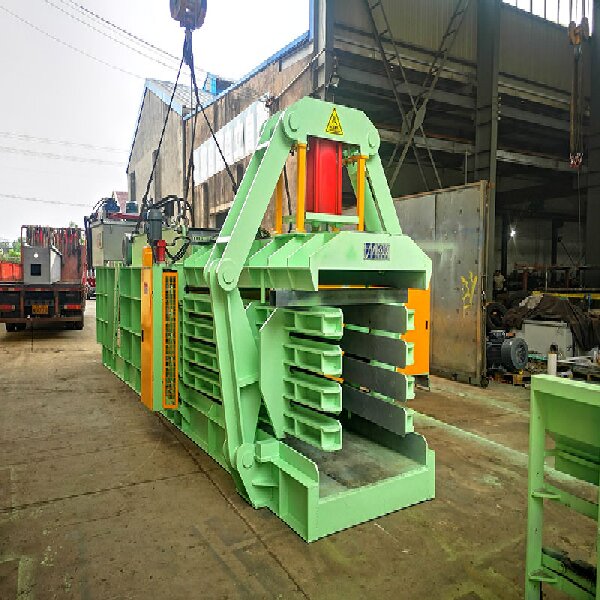
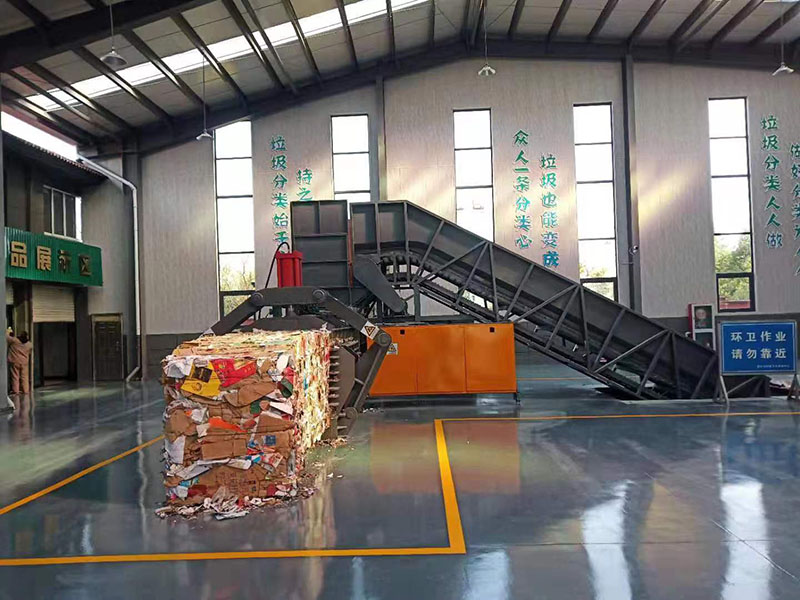
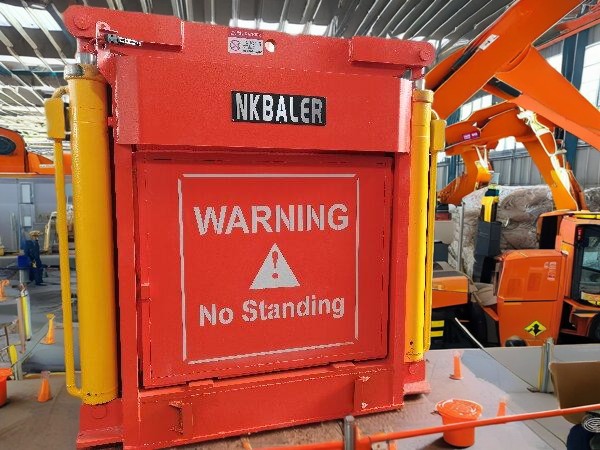
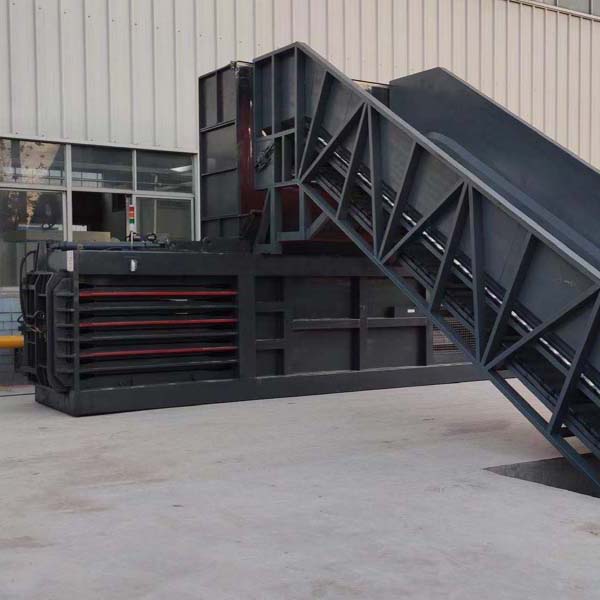
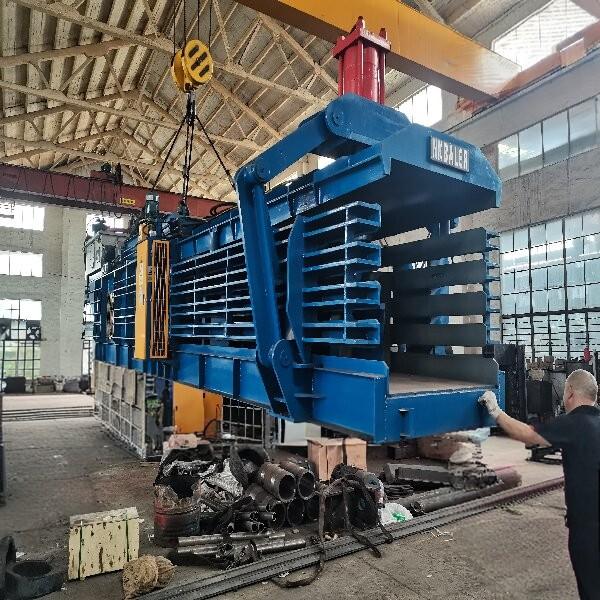
The equipment details you supplied point to a different but relevant class of machinery: a heavy-duty, hydraulic, welded-steel baler or compactor with a box-shaped body, reinforced panels, visible cylinders, and a control cabinet. That kind of industrial layout is typical in waste handling and recycling applications, where the goal is volume reduction for cardboard, paper, plastic film, or light scrap. It is not possible to confirm that exact model or material compatibility from the image alone, and it should not be described as a forage baler without additional verification.
Still, the fabrication logic is familiar. Heavy steel frame construction, hydraulic actuation, and integrated controls are the backbone of many compaction systems. For forage buyers, that industrial comparison can be useful because it highlights what actually drives reliability: rigid structure, stable hydraulics, safe control access, and a discharge path that does not jam under repeated use. The end application is different, but the engineering discipline is similar.
Common mistakes buyers make when comparing balers
One frequent mistake is buying on throughput alone. A salesperson can quote impressive output numbers, but those numbers may depend on ideal moisture, crop length, and operator skill. Real fields are messier.
Another mistake is underestimating how bale size affects the rest of the operation. A bale that looks efficient to make may not fit the labor model for feeding, stacking, or shipping. A farm that saves time in the field can lose it in the yard.
Buyers also sometimes overlook serviceability. In baling, downtime tends to happen at the worst possible moment, often during a weather window. A practical machine is one that can be inspected, cleaned, and adjusted without making the crew miserable. That is not a glamorous feature, but it matters more than glossy literature suggests.
Moisture, timing, and operator discipline
No baler compensates for poor timing. Alfalfa should be baled in the right moisture range for the bale format and storage plan. Too much moisture can lead to spoilage and heating, while overly dry crop can increase leaf shatter. The machine settings matter, but the field decision often matters more.
Operators should also watch windrow consistency. A machine fed a uniform swath performs better than one forced to handle patchy material. That sounds obvious, but in real harvest conditions it is often the difference between clean, repeatable bales and a long afternoon of stoppages.
Practical buyer checklist
Before you compare brands or ask for a quotation, it helps to define the operating envelope:
What bale format do you want?
What crop conditions are typical in your region?
How many people will handle the bales after ejection?
What storage method is used on-site?
How much tractor power and hydraulic support do you have available?
What is the real maintenance skill level in your operation?
These questions sound basic, but they prevent expensive mismatches. A machine that suits a large commercial forage business may be overkill for a mid-sized operation. On the other hand, a lightweight unit can become a false economy if it breaks down every season.
Where industrial buyers should be careful
If you are sourcing equipment for a machinery line, dealer network, or farm equipment program, be careful with generic product descriptions. “Baler” can mean very different things depending on the industry. A heavy hydraulic compactor used for packaging waste is not automatically suitable for alfalfa, and forage balers are built around crop flow, field mobility, and crop preservation. Those differences are not cosmetic. They go straight to the machine’s frame, pickup, feed system, and service parts.
That is why specification discipline matters. Ask for material compatibility, bale format, power requirements, and service documentation. If a supplier cannot clearly separate crop baling from waste compaction, that is a red flag. The machine may still be good, but the sales language is not doing you any favors.
FAQ: short answers buyers usually want first
Is an alfalfa baler different from a general hay baling machine?
Often, yes. Alfalfa needs gentler handling because leaf retention is critical. A general hay baling machine may work, but not every model is equally suited to fragile forage.
What bale type is most efficient?
It depends on labor, storage, and customer expectations. Large bales improve transport density, while small bales can be easier to handle manually.
Can one machine handle multiple forage types?
Sometimes, but performance varies with crop structure and moisture. Buyers should ask how the machine behaves across different conditions, not just whether it can technically run.
What is the biggest hidden cost?
Usually downtime, maintenance, and handling inefficiency after the bale is made. The baler is only one part of the system.
What to ask a supplier next
When you move from comparison to sourcing, ask for the specifics that affect real-world use: bale format options, crop-flow design, recommended operating moisture window, service access points, and spare parts support. If you are evaluating a heavy-duty hydraulic machine for other industrial uses, ask the same disciplined questions about chamber size, hydraulic layout, control integration, and discharge method. The jargon changes, but the buyer logic stays the same.
If you need help narrowing the machine type for your operation, the next step is usually a requirements list, not a product brochure. Define the crop, the handling route, the storage method, and the labor available. From there, the right baler becomes much easier to identify.
Recent Posts
Get In Touch With Us Now For A Product Quote


Hello! What do you need help with?