







Blog

Exploring the Difference Between Fully & Semi-Automatic Balers
In the world of industrial waste management and recycling, choosing the right equipment can make or break operational efficiency. The difference between fully automatic baler and semi-automatic baler machines lies at the heart of this decision, influencing everything from productivity to labor costs. As industries push towards sustainability, understanding these machines’ distinctions becomes crucial for optimizing processes. This comparison highlights how fully automatic balers streamline operations with minimal human intervention, contrasting with semi-automatic balers that require more hands-on involvement, ultimately guiding businesses toward the best fit for their needs.

Defining the Core Mechanisms: Semi-Automatic Baler vs. Fully Automatic Baler
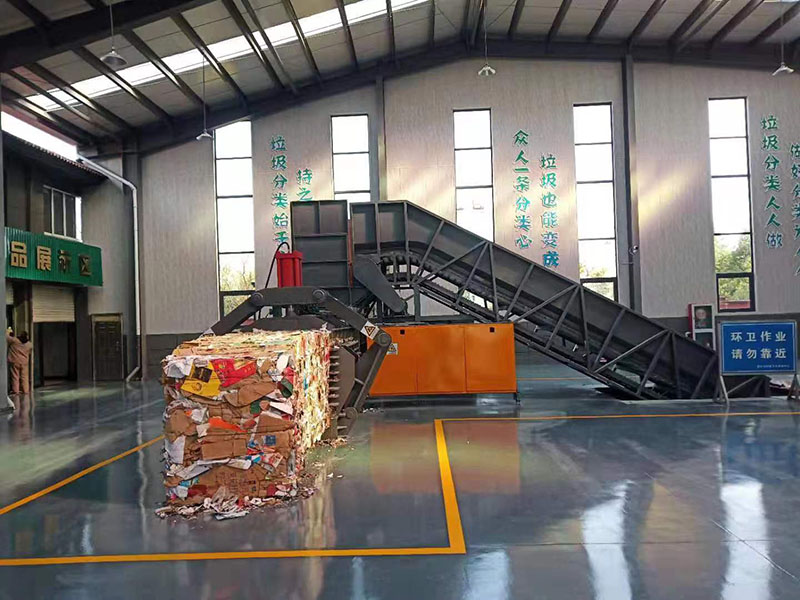
A semi-automatic baler represents a middle ground in automation, where operators manually load materials into the chamber before the machine takes over the compression process using hydraulic power. In contrast, a fully automatic baler handles the entire cycle autonomously, from feeding materials via integrated conveyors to ejecting finished bales. This fundamental difference stems from their design philosophies: semi-automatic models prioritize cost-effectiveness for smaller operations, while fully automatic ones are engineered for high-volume environments demanding relentless throughput. For instance, in a semi-automatic baler, an operator might spend significant time sorting and loading waste like paper or plastics, whereas a fully automatic system uses sensors and automated feeders to process diverse materials without pause. This contrast underscores how semi-automatic balers suit intermittent use, but fully automatic versions excel in continuous, 24/7 operations, reducing bottlenecks in busy recycling centers.
Operational Efficiency: A Baler Machine Comparison
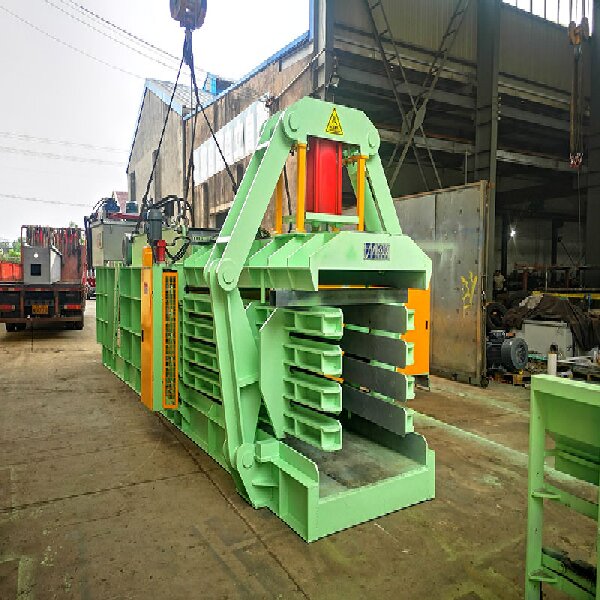
When conducting a baler machine comparison, operational efficiency emerges as a key battleground. Semi-automatic balers often require manual intervention at multiple stages—loading, cycle initiation, and bale removal—which can lead to downtime and higher labor demands. Operators must monitor each cycle closely, adjusting for material variations, which might slow production to 10-20 bales per hour depending on the model. On the flip side, fully automatic balers integrate conveyor systems for seamless material intake, automated tying mechanisms, and ejection processes, achieving rates of 30-50 bales per hour or more. This disparity becomes evident in high-capacity settings, where a semi-automatic baler’s reliance on human oversight can introduce errors or fatigue-related slowdowns. In our experience with industrial solutions like the Hydraulic Horizontal Baling Machine, fully automatic systems minimize these issues by leveraging advanced sensors for real-time adjustments, ensuring consistent compaction force across metals, plastics, or cardboard. The result? A stark contrast in workflow: semi-automatic for flexible, low-volume tasks versus fully automatic for scalable, error-resistant performance.
Unpacking the Automatic Baler Benefits in Daily Use
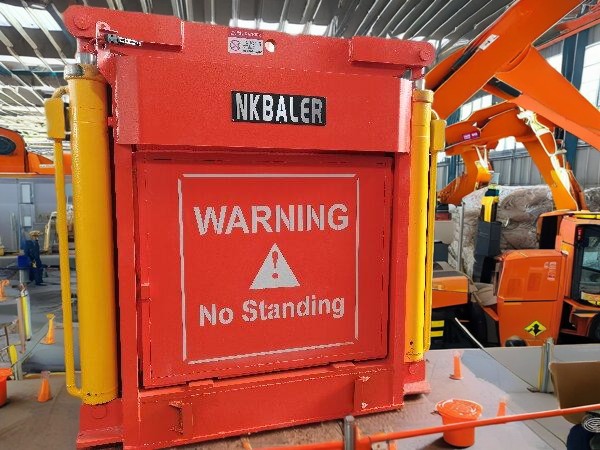
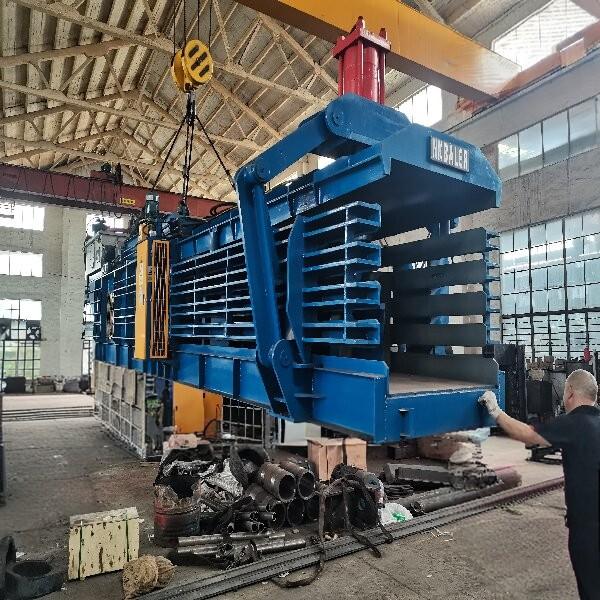
Delving into automatic baler benefits reveals why many modern facilities are shifting gears. One primary advantage is labor savings; fully automatic balers reduce the need for constant supervision, allowing workers to focus on higher-value tasks like quality control or maintenance. In comparison, semi-automatic balers demand dedicated personnel, potentially increasing payroll costs by 20-30% in labor-intensive setups. Safety also contrasts sharply: while both types incorporate guards and emergency stops, fully automatic models enclose more processes, minimizing exposure to moving parts—a boon in noisy, hazardous environments. Our state-of-the-art high-capacity horizontal baler, for example, features ergonomic controls and noise-reducing designs painted in vibrant red and yellow for visibility, enhancing operator safety without compromising speed. Energy efficiency further tilts the scales; automatic balers optimize power usage through smart automation, often consuming less per bale than semi-automatic counterparts that idle during manual phases. Environmentally, both aid recycling, but fully automatic systems produce denser, uniform bales that cut transportation emissions, aligning with sustainability goals more effectively.
Cost Implications: Initial Investment vs. Long-Term Savings
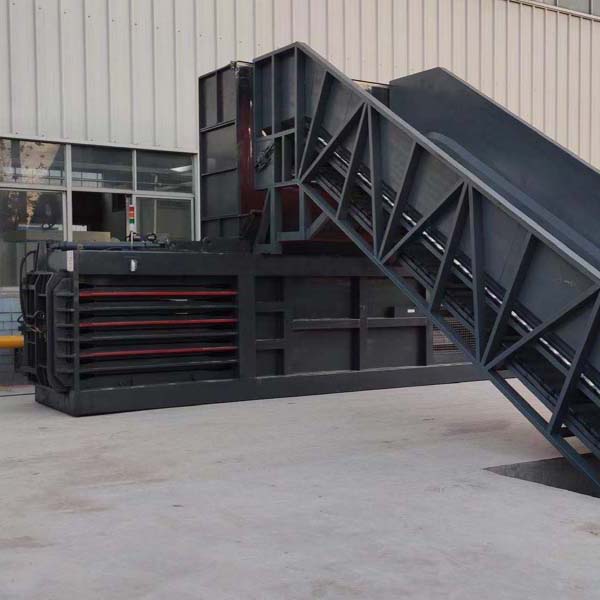
A thorough baler machine comparison wouldn’t be complete without addressing costs, where the differences between fully automatic baler and semi-automatic baler machines shine through trade-offs. Semi-automatic balers typically carry a lower upfront price—often 40-60% less than fully automatic models—making them attractive for startups or small-scale recyclers with budgets under $50,000. However, this affordability comes at the expense of scalability; over time, higher labor and maintenance needs can erode savings, especially as production volumes grow. Fully automatic balers, though pricier initially (ranging from $100,000 to $300,000), deliver ROI through reduced operational expenses. Features like our industrial conveyor system’s angled elevation and robust framework integrate effortlessly, cutting manual handling and boosting throughput by up to 50%. In a side-by-side analysis, a semi-automatic setup might break even in 2-3 years for light use, but for medium-to-large operations, fully automatic benefits accrue faster via lower energy bills and minimal downtime. Businesses eyeing expansion should weigh this: the semi-automatic’s simplicity versus the automatic’s investment in future-proof efficiency.
Material Handling and Versatility: Tailoring to Your Needs
Versatility in material handling further illuminates the difference between fully automatic baler and semi-automatic baler machines. Semi-automatic balers excel with uniform waste streams, such as office paper or single-type plastics, where manual pre-sorting ensures clean compression. Their adjustable chambers accommodate varying bale sizes, offering flexibility for diverse but low-volume tasks. Conversely, fully automatic balers shine in mixed-material environments, using conveyor-fed hoppers and AI-driven sorting to process everything from metals to textiles without reconfiguration. Our Hydraulic Horizontal Baling Machine exemplifies this with its powerful hydraulic hoses and high-capacity feeders, compacting diverse recyclables into economical bales that optimize space. In comparison, a semi-automatic baler’s hands-on approach limits it to 5-10 material types efficiently, while automatic systems handle 20+ seamlessly, reducing waste contamination. This contrast is pivotal for industries like manufacturing, where automatic baler benefits include seamless integration into smart factories, versus semi-automatic’s niche in artisanal or seasonal recycling.
Maintenance and Durability: Ensuring Longevity
Maintenance demands present another layer in this baler machine comparison. Semi-automatic balers, with fewer automated components, require simpler upkeep—basic hydraulic checks and occasional part replacements—typically costing 10-15% of the machine’s value annually. Their sturdy, enclosed designs, like those with metallic frameworks, withstand moderate wear but falter under constant use. Fully automatic balers, packed with sensors and motors, demand proactive diagnostics, yet their advanced engineering, such as our high-efficiency motors in azure and orange finishes, ensures durability in demanding settings. Predictive maintenance via integrated tech cuts unplanned repairs by 30-40%, contrasting semi-automatic’s reactive fixes that can halt production. Over a 5-10 year lifespan, automatic models prove more resilient, with benefits like noise reduction and safety enclosures extending operational life. For facilities prioritizing uptime, the automatic’s sophistication outweighs the semi-automatic’s straightforward reliability.
Future-Proofing Your Operations: Making the Choice
Ultimately, the difference between fully automatic baler and semi-automatic baler machines boils down to your operational scale and goals. Semi-automatic balers offer an accessible entry point for budding recyclers, providing solid performance without overwhelming complexity. Yet, as businesses scale, the automatic baler benefits— from labor savings and higher efficiency to enhanced sustainability—position them as indispensable for competitive edges. In our lineup, including the innovative industrial conveyor systems and horizontal balers, we see fully automatic solutions transforming waste into value, far surpassing semi-automatic limitations. By comparing these machines, industries can align technology with ambitions, fostering efficiency and environmental stewardship. Whether upgrading or starting anew, the right baler isn’t just equipment—it’s a strategic partner in progress.
(Word count: 1,128)
Recent Posts
Get In Touch With Us Now For A Product Quote


Hello! What do you need help with?