







Blog

Waste Paper Baler Guide: Choosing the Right Machine for Your Site
Why a waste paper baler matters more than it first looks

A waste paper baler is one of those machines that can quietly change the economics of a plant. On paper, it is just a compaction press. In practice, it affects how much floor space you lose to loose cardboard, how often staff handle waste, what freight you pay to move recyclables, and how cleanly a site can keep up with production. For warehouses, recycling facilities, manufacturing plants, and distribution centers, that is not a minor housekeeping issue; it is an operating decision.
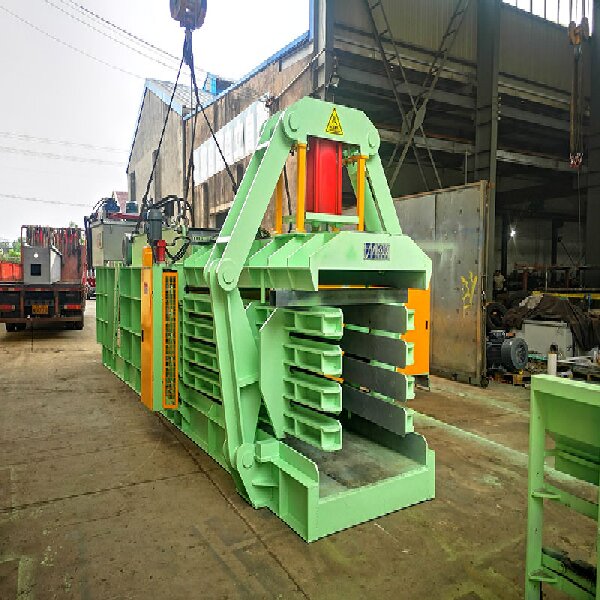
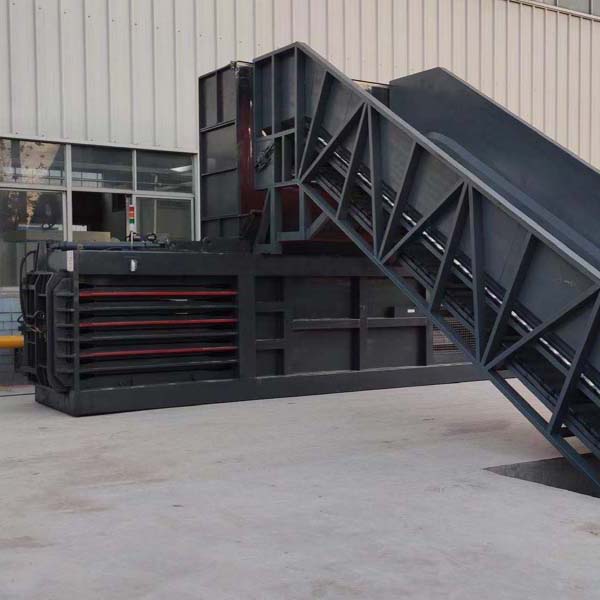
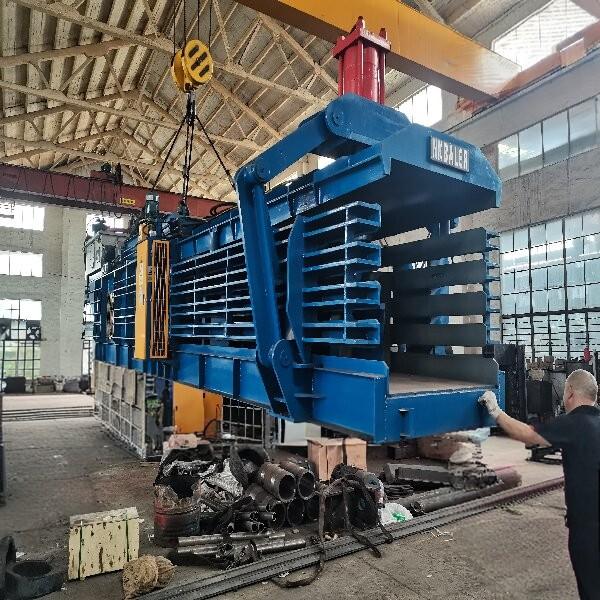
The visible machine in this category is typically a large hydraulic industrial baler with a welded steel frame, a long horizontal chamber, and a heavy-duty compression section. That matters because the structure tells you what the machine is built to do: take bulky loose waste and turn it into dense, manageable bales for storage, transport, or resale into recycling streams. If you are evaluating a paper baling machine or a cardboard baler, you are really deciding how to control waste volume without creating bottlenecks, safety problems, or maintenance headaches.
What a waste paper baler actually does
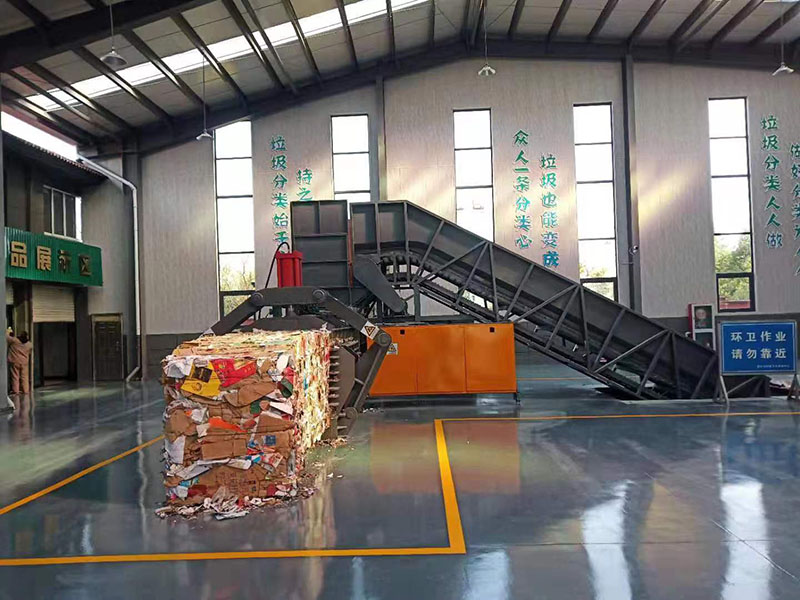
At the simplest level, the machine collects loose paper, cardboard, or similar lightweight recyclable material and compresses it under hydraulic force. The result is a compact bale that is easier to stack, move, and ship. That sounds straightforward, but the details matter. A poorly matched machine can leave you with inconsistent bale density, slow cycle times, or a layout that does not fit the building.
A horizontal baler is often chosen when volume is high and waste generation is continuous. The long rectangular body and fixed-floor installation seen in this type of equipment are clues. These machines are built for industrial sites where cardboard from packaging, paper trim, or mixed lightweight scrap needs to be processed repeatedly rather than in occasional batches. The hydraulic power unit, hoses, and enclosed control section are not decorative; they are what let the system deliver the force needed to compact material reliably.
Quick reference: when this equipment makes sense
If your site handles large volumes of corrugated boxes, office paper, paperboard, or lightweight packaging waste, a cardboard baler can be more practical than simply placing more bins around the building. The main reason is density. Loose waste consumes space quickly, and once space runs short, staff start making judgment calls that often cost more than the machine would have.
A horizontal baler usually makes sense when:
– Waste is generated all day, not just at the end of a shift
– Material volume is high enough to justify a fixed installation
– You want easier loading and less manual handling
– Bales need to be moved by forklift or pallet equipment
– You need a cleaner, more organized recycling area
If waste is modest or intermittent, a smaller baling setup may be enough. Not every site needs a large industrial machine, and that is worth saying plainly. Bigger is not automatically better if the workflow is light.
Key machine features buyers should look at first
The frame and chamber are the first things to inspect. A large welded steel frame, reinforced side walls, and a boxy horizontal body suggest the machine is designed for repeated compression under load. That is exactly what you want in an industrial baler, because flex in the structure can affect consistency over time.
The hydraulic system deserves just as much attention. Visible cylinders, hose runs, and a protected power section usually indicate a machine built around hydraulic compression rather than mechanical pushing. For buyers, that usually translates into better control over compaction, though it also means hydraulic maintenance matters. Seals, hoses, and oil condition are not glamorous topics, but they are where many baler problems start.
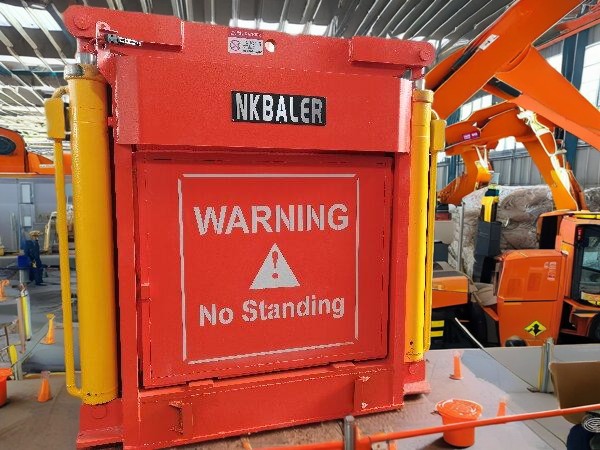
Safety features are not optional window dressing either. The warning signage and guarded working area on this kind of machine should be treated as part of the specification, not an afterthought. Baling equipment can move with serious force, and any site that installs one needs clear procedures for loading, clearing jams, and servicing the unit.
What you should ask before buying
The image alone does not reveal capacity, bale size, throughput, power rating, or automation level, so those are exactly the questions to ask a supplier. A buyer should also confirm the material type the machine is intended for. A baler optimized for cardboard may not behave the same way with plastic film, textile waste, or mixed recyclables. The machine may handle several materials, but you should never assume that from the outside.
Ask for the following in practical terms:
– What material is the machine designed to compress?
– What bale size and density does it typically produce?
– How much floor space and service clearance does it need?
– What is the loading method: conveyor, manual feed, or another system?
– What maintenance points need routine attention?
– What level of operator training is required?
That last point gets ignored too often. A robust machine still needs disciplined operation.
Horizontal baler versus other baling setups
The term horizontal baler is often used when the compression chamber runs lengthwise and the material is processed in a horizontal orientation. That format is useful for higher-volume sites because it tends to fit conveyor-fed or continuous workflows better than compact vertical machines.
A paper baling machine in this category is usually selected for industrial recycling streams where throughput and bale consistency matter. By comparison, smaller vertical machines may suit lower-volume locations with less frequent waste generation and less space to spare.
A cardboard baler is a more specific way to describe the same general duty when corrugated boxes and packaging waste are the main target. The important distinction for buyers is not just the name, but the workflow. If cartons are broken down at packing stations and moved to a central waste area, the machine should be located and fed in a way that keeps travel time short. Otherwise, the baler becomes a traffic obstacle instead of a productivity tool.
Common mistakes that cause trouble later
One common mistake is buying for peak volume without considering daily operation. A machine may look impressive, but if loading is awkward or the site lacks enough staging space, the system will underperform in real life. Another frequent issue is underestimating service access. Hydraulic equipment needs room around it. If maintenance panels, hose runs, or the compression chamber are difficult to reach, downtime becomes more expensive than expected.
A second mistake is assuming all recyclable waste behaves the same. Paper, cardboard, plastic film, and mixed industrial scrap do not compact identically. Moisture content, contamination, and material shape all affect bale quality. If the waste stream is inconsistent, the baler may still work, but output may be less tidy than a purchasing team hoped for.
A third issue is ignoring operator safety. The large industrial design can create a false sense of security because the machine sits in a fixed area behind a guarded structure. That is exactly why site rules matter. Keep standing zones clear, train staff on feed and clear-out procedures, and make sure the warning signage is matched by actual practice.
Practical buyer advice for sourcing teams
If you are sourcing a waste paper baler for a plant or warehouse, start with the waste stream rather than the machine brochure. Count what you actually generate. Estimate how often waste needs to be cleared. Decide whether the aim is storage reduction, freight savings, cleaner handling, or all three. That will narrow the field faster than comparing glossy machine photos.
Then look at the plant layout. A large baler with a fixed footprint is not easy to “make fit” after the fact. You need entry and exit paths for material, safe access for operators, and room for maintenance. If the machine is fed by forklift or conveyor, the surrounding traffic pattern matters just as much as the compaction chamber itself.
It is also worth asking about service support in plain language. Hydraulic machines are durable, but they are not maintenance-free. You want to know what consumables are common, which parts are likely wear items, and whether the supplier can support the machine over its working life. That kind of detail is not exciting, but it is what separates a smooth installation from a long series of small interruptions.
FAQ: short answers buyers usually want
What materials can a waste paper baler handle?
Typically paper, corrugated cardboard, and other light recyclables. Some machines may also suit plastic film or textile waste, but compatibility should be confirmed by the supplier.
Is a horizontal baler always the best choice?
No. It is often a strong choice for higher-volume sites, but smaller or less active facilities may do better with a different baling arrangement.
Why does bale density matter?
Denser bales are easier to store and transport. They also reduce unnecessary volume, which can lower handling costs and improve site cleanliness.
What should I verify before purchase?
Material type, bale size, throughput, power needs, floor space, maintenance access, and operator safety requirements.
A sensible next step for buyers
If your operation is paying to move air instead of material, it is time to look seriously at a waste paper baler. Start by matching the machine to your waste stream, not the other way around. A well-chosen baler should reduce clutter, simplify handling, and support recycling without adding avoidable complexity.
For sourcing managers and plant teams, the right move is usually to collect site data first: waste volume, material mix, available floor space, and loading method. With that in hand, you can compare a paper baling machine, a cardboard baler, or a horizontal baler on practical grounds rather than guesswork. That approach is slower by a day or two, but it saves a lot more than that later.
Recent Posts
Get In Touch With Us Now For A Product Quote


Hello! What do you need help with?