







Blog

Waste Paper Baler: How to Choose the Right Baling Setup
Why a waste paper baler matters when waste volume starts costing real money
A waste paper baler is not just another piece of recycling equipment. For many plants, it is the difference between loose, space-hogging paper waste and a material stream that can be stacked, stored, moved, and sold with far less friction. If your site handles corrugated trim, office paper, mixed packaging, or other paper-heavy scrap, the right baling setup can reduce handling time and make the whole back end of production easier to manage.
That matters because waste paper is bulky before it is valuable. Left loose, it takes up floor space, invites contamination, and usually demands more forklift moves than anyone wants to count. When compressed properly, the same material becomes easier to stage for pickup and more predictable for downstream recycling. Buyers are not simply shopping for a machine; they are deciding how much labor, space, and transport inefficiency they want to keep paying for.
In practice, the choice often comes down to the type of baler, the layout of the facility, and the form of waste generated every day. A paper baling machine that works well for carton waste may not be the best fit for mixed packaging film or high-volume trim scrap. That is where a closer look saves headaches later.

What the machine is doing, in plain terms
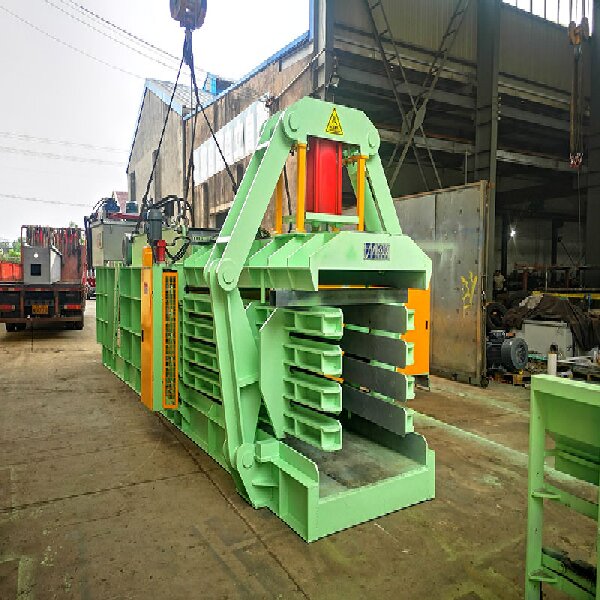
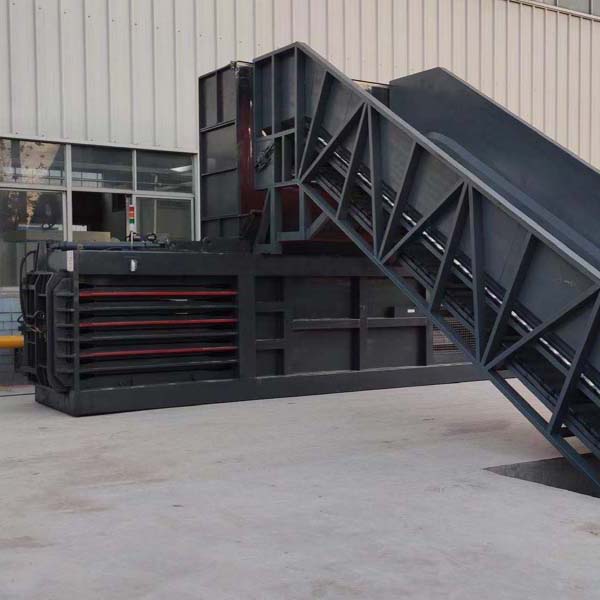
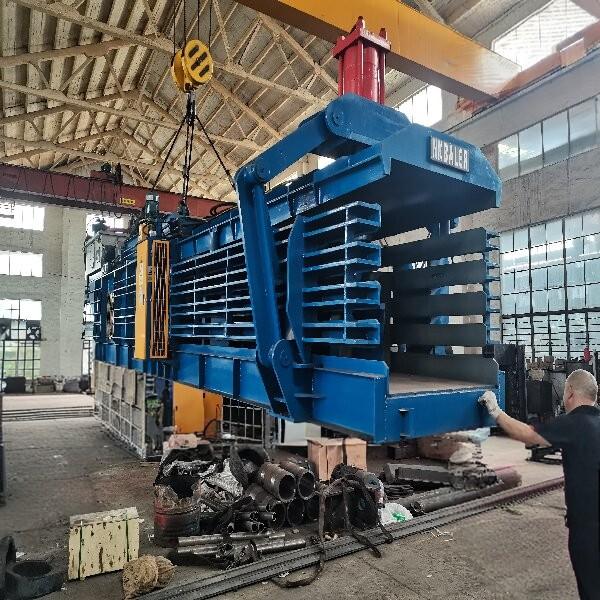
The product described here is a large industrial hydraulic compression system, built around a heavy welded steel frame, a long horizontal press chamber, and an integrated hydraulic power unit. In recycling and waste handling environments, that kind of construction usually points to a horizontal baler or related compaction press. The exact model and pressing force are not supplied, so it should not be described more specifically than that.
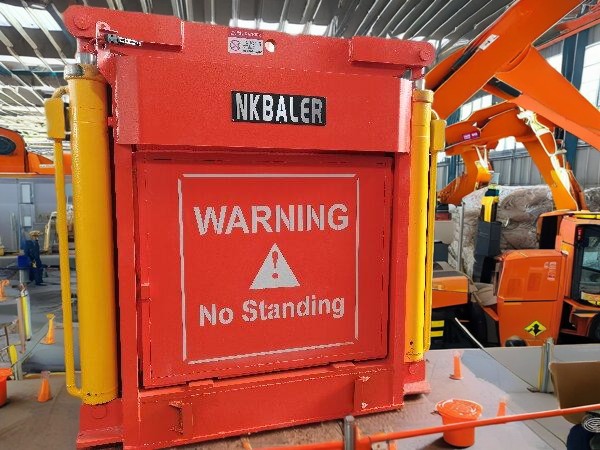
What is clear is the design intent: apply hydraulic force through a long ram to compress loose material into a denser form. For paper and cardboard recovery, that means fewer loose bundles, cleaner storage, and easier transport. The visible warning signage and enclosed guarding also suggest a machine meant for industrial use, where operator safety and controlled access are part of the basic spec, not optional extras.
Horizontal baler, cardboard baler, or waste paper baler: how to think about the terms
Buyers often use these terms loosely, and that is understandable. A cardboard baler is usually a type of waste paper baler focused on corrugated board and carton waste. A horizontal baler generally describes the machine geometry and feeding style: material is loaded into a horizontal chamber and compressed in line with the machine body. Not every horizontal baler is used only for paper, and not every waste paper baler is limited to cardboard.
For sourcing teams, the practical takeaway is simple. Focus less on the label and more on the waste stream. Ask what enters the machine, how often it enters, how dense the final bale needs to be, and what downstream handler will accept. Those questions matter more than the name on the brochure.
Where this kind of machine fits in a plant
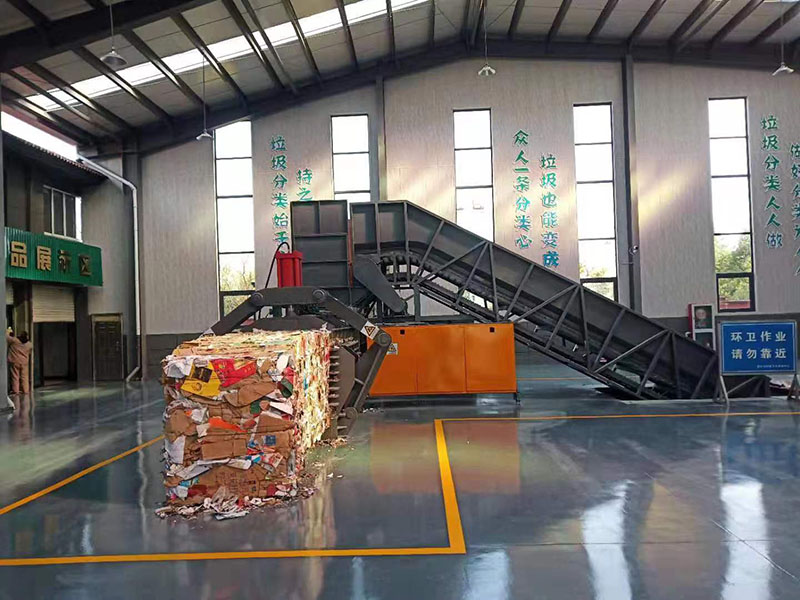
A large floor-mounted baler makes the most sense where waste volume is steady and handling costs are visible. Typical settings include recycling plants, scrap yards, paper recovery lines, packaging facilities, warehouse operations, and manufacturing sites generating significant cardboard or mixed paper waste. In these environments, loose waste can quickly become a logistics problem. It crowds aisles, slows collection, and can create housekeeping issues that nobody wants near production.
The image data indicates a substantial steel structure, painted industrial finish, hydraulic hoses, and a separate power unit housing. That combination suggests a fixed installation, not a mobile shop tool. For a buyer, that means planning for foundation load, machine clearances, loading method, and service access. Too many teams pick the machine first and then discover the floor plan is the real constraint.
What to look for before you compare suppliers
There are a few practical questions worth asking before a quote goes out.
1. What material is actually being baled?
Cardboard behaves differently from mixed office paper, and plastic film behaves differently again. If the waste stream is dirty or mixed, the machine, feed method, and operator routine all change. A cardboard baler may be the wrong answer if the incoming material is loose, springy, or contaminated with stretch wrap and tape.
2. How will material be fed?
Manual loading, conveyor feeding, and forklift-assisted loading each imply a different machine layout. A horizontal baler can suit higher throughput, but only if the plant can feed it consistently. In a busy facility, the machine often fails not because the hydraulics are weak, but because the feed process is awkward.
3. What happens after the bale is formed?
Bale size, tie method, discharge style, and storage space all affect the economics. A dense bale is helpful only if it can be moved and sold without extra handling. If the downstream recycler has a preferred bale format, the baler should be selected around that requirement rather than around a best-case assumption.
4. Is the machine safety-friendly for daily use?
The visible warning label on the front guard is a reminder that heavy compaction equipment needs clear operator discipline. Buyers should pay attention to guarding, access points, jam clearing procedures, and maintenance reach. A machine that is hard to clean or inspect tends to become a machine people avoid servicing until something goes wrong.
Why hydraulic construction still dominates this category
Hydraulic actuation remains the standard for many heavy balers because it delivers controlled force in a compact industrial package. In a waste paper baler, that means the compression stroke can be powerful and deliberate rather than abrupt. The heavy steel frame visible in the product description is not just there for looks; the structure has to resist repeated loads without flexing excessively.
For purchasers, this matters because durability is not a marketing flourish in compaction equipment. The machine takes repeated stress, and the difference between a robust frame and a marginal one shows up later in alignment, wear, and maintenance frequency. That said, hydraulic systems are only as good as the integration around them. Hoses, seals, controls, and access for service all deserve attention. A strong press with poor service access can become expensive in ways that do not appear on the first quote.
Common buyer mistakes that lead to poor baler performance
One common mistake is buying for peak volume instead of average reality. Another is assuming every paper waste stream will compact the same way. Loose office paper may behave quite differently from folded cartons or mixed corrugated offcuts. A third mistake is overlooking the daily operating rhythm. If the machine needs a perfect loading cadence but the plant runs irregular shifts, the baler may spend more time waiting than working.
There is also a layout mistake that shows up often: underestimating the footprint. Large horizontal balers are not small pieces of equipment tucked beside a conveyor. They need room for loading, discharge, service, and safe movement around the machine. The “No Standing” warning on the front guard is a practical clue, not decoration. If operators have to crowd the equipment to make it work, the installation needs to be revisited.
How to evaluate a supplier without overcomplicating the process
When comparing suppliers, ask for the basics first: machine type, intended materials, chamber size, power system layout, guarding, and maintenance approach. Then ask how the machine is fabricated. The product description suggests welded fabrication plus hydraulic integration, which is typical for heavy industrial equipment. That means build quality, alignment, and component sourcing matter as much as the headline specification.
Do not overreach into unsupported promises. If a supplier cannot clearly state tonnage, bale dimensions, throughput, or automation level, treat that as a gap, not a minor detail. For a buyer, those are the numbers that determine whether the machine fits the process. The safest procurement decision is the one based on verified operating data, not assumptions about “heavy duty” branding.
When a waste paper baler is the right investment
A waste paper baler becomes compelling when waste handling is taking too much labor, too much floor space, or too many transport movements. If your team is stacking loose cardboard in corners, making repeated forklift runs to a dumpster, or paying for hauling air, then compression equipment can change the economics quickly. The machine does not eliminate waste. It makes the waste stream manageable.
For facilities handling paper and cardboard recovery, that is often enough to justify the shift. The key is matching the machine to the actual waste stream and to the plant layout around it. A horizontal baler may offer the right path for higher-volume operations, while a simpler setup may suit smaller lines better. The decision should be grounded in the daily reality of the plant, not in a generic recycling narrative.
FAQ for buyers
Is a waste paper baler only for cardboard?
No. The term can cover paper, corrugated board, and similar recyclable streams, but the exact suitability depends on the machine design and the material being fed.
Is a horizontal baler always the best choice?
Not always. It is often a strong choice for higher-volume or more continuous operations, but the best fit depends on space, feed method, and downstream bale requirements.
Can one machine handle mixed packaging waste?
Sometimes, but that should be confirmed with the supplier. Mixed waste streams are harder to predict, and contamination can affect bale quality and machine performance.
What should I verify before purchase?
Check material type, feed method, footprint, service access, guarding, and the specific bale handling process. If any of those are vague, ask for clarification before moving forward.
A practical next step for sourcing teams
If your facility is considering a waste paper baler, start by documenting what is actually coming off the line for one week. Not what should be there, but what really is there. Weight, volume, contamination, shift patterns, and storage behavior will tell you more than a polished product sheet. From there, you can judge whether a cardboard baler, a larger horizontal baler, or another hydraulic compaction system makes sense.
The best buying decision in this category is usually the one that reduces handling twice: once inside the plant and once on the road out. That is where the value shows up, and that is where the machine earns its place on the floor.
Recent Posts
Get In Touch With Us Now For A Product Quote


Hello! What do you need help with?